

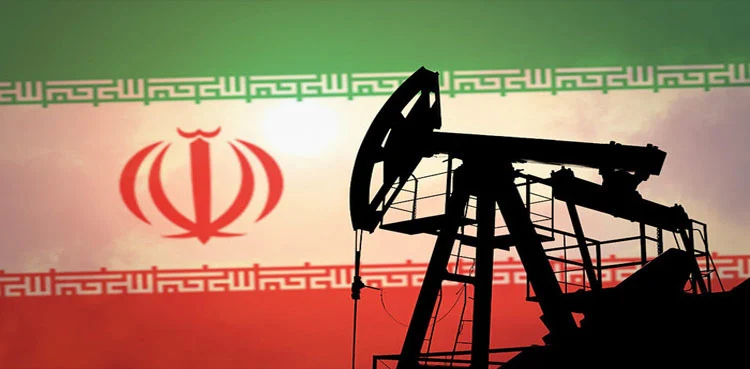
Iran economy seen holding steady despite US naval blockade
DOHA: Analysts say a US naval blockade of Iranian ports may curb the country’s oil output in the coming weeks, but claims that it will trigger an economic collapse appear overstated for now.
After weeks of conflict, attention has shifted to the Strait of Hormuz, a vital route that typically carries around one-fifth of the world’s oil and liquefied natural gas.
Following Iran’s own restrictions in the strait since the start of the war, the United States imposed a counter-blockade targeting Iranian ports in an effort to push Tehran toward concessions in peace negotiations.
However, experts suggest the immediate impact may be limited.
“If the blockade continues for more than two or three months, it could inflict more serious damage,” said Saeed Laylaz, an economic analyst at Shahid Beheshti University in Tehran. He added that any economic strain on Iran would likely have wider repercussions for Gulf economies.
Still, analysts warn Iran faces constraints. Arne Lohmann Rasmussen of Global Risk Management noted that Iran could reach its oil storage capacity within weeks, potentially forcing production cuts.
US officials have argued the blockade is already taking a toll. President Donald Trump claimed Iran was “collapsing financially,” while Treasury Secretary Scott Bessent said storage facilities at key export hubs like Kharg Island could soon reach capacity.
Yet industry experts remain cautious about such assessments. Jamie Ingram of the Middle East Economic Survey said Iran is more likely to gradually scale back output before hitting storage limits.
Data cited by energy analysts indicates Iran’s oil production has already declined, dropping by about 200,000 barrels per day in March, with further reductions expected in April due to export disruptions linked to the conflict.
Despite this, analysts say the broader economic impact has so far been modest. Iran may also redirect oil to alternative storage sites, easing pressure on main export terminals.
Experts highlight that Iran has previously weathered significant oil revenue losses under sanctions, suggesting a degree of resilience.
At the same time, the standoff risks wider disruption. Analysts describe the situation as a form of “mutually assured disruption,” where both Iran and global markets face economic strain if tensions persist.
While Tehran has signaled openness to mediation efforts, it has also indicated it will not reopen the Strait of Hormuz as long as the US blockade remains in place.
Observers say sustained economic pressure could eventually influence negotiations, but any shift is likely to take time.