
Iran on Monday warned that it would treat any US interference in the Strait of Hormuz as a violation of the Mideast ceasefire, after President Donald Trump announced that Washington would begin escorting vessels through the restricted waterway.
Talks between the two sides have remained stalled since the ceasefire took effect on April 8, with tensions over the Strait of Hormuz escalating after Iran imposed restrictions on the key shipping route following US-Israeli strikes on Tehran.
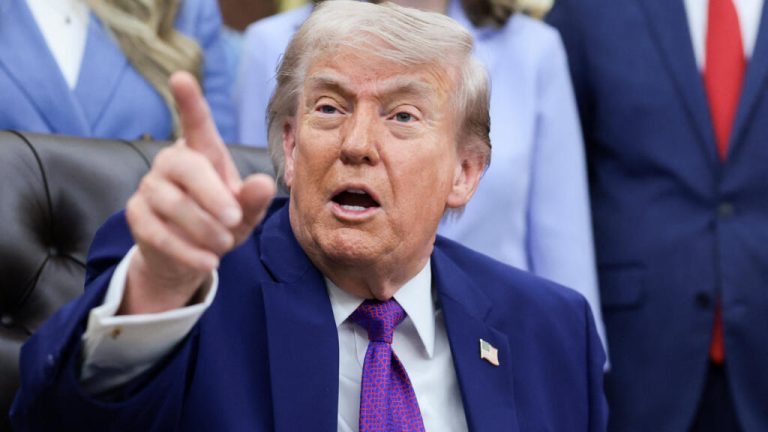
On Sunday, Trump announced a new maritime initiative dubbed “Project Freedom,” describing it as a humanitarian effort aimed at assisting crews of ships caught in the blockade and facing shortages of essential supplies.
“We will use best efforts to get their ships and crews safely out of the Strait. In all cases, they said they will not be returning until the area becomes safe for navigation,” Trump said in a Truth Social post, adding that operations would begin on Monday.
In response, the head of Iran’s parliament national security commission stated that “any American interference in the new maritime regime of the Strait of Hormuz will be considered a violation of the ceasefire.”
By blocking the Strait of Hormuz, Iran has choked off major flows of oil, gas and fertiliser to the world economy, while the United States has imposed a counter-blockade on Iranian ports.
Trump, in his post, said he was “fully aware that my Representatives are having very positive discussions with the Country of Iran, and that these discussions could lead to something very positive for all.”
He made no direct mention of what Tehran described as a 14-point plan “focused on ending the war.”
US Central Command said it would use guided-missile destroyers, over 100 land and sea-based aircraft, multi-domain unmanned platforms and 15,000 service members in the Hormuz effort.
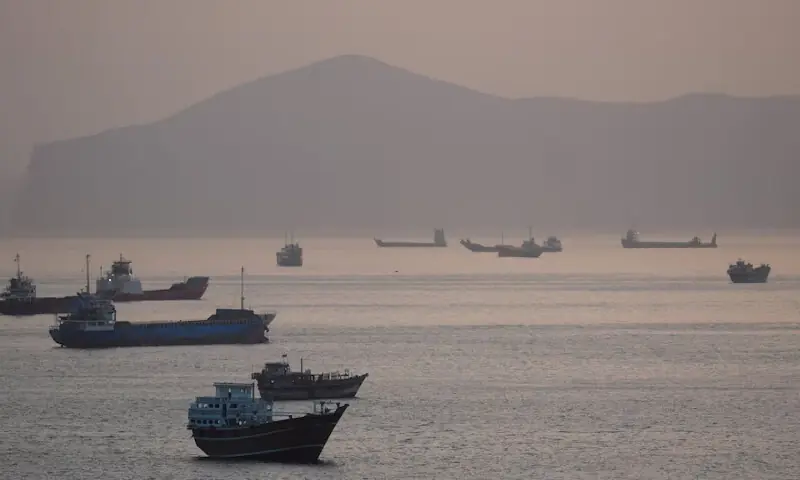
As of April 29, more than 900 commercial vessels were located in the Gulf, according to maritime intelligence firm AXSMarine.
‘Impossible operation’
US news website Axios, citing two sources briefed on the proposal, reported that Iran set “a one-month deadline for negotiations on a deal to reopen the strait,” dissolve the US naval blockade and end the war.
Earlier Sunday, the Revolutionary Guards sought to put the onus back on Trump, saying he must choose between “an impossible operation or a bad deal with the Islamic Republic of Iran.”
Washington’s European allies are concerned that the longer the strait remains closed, the more their economies will suffer, and German Foreign Minister Johann Wadephul demanded that it be reopened.
In a call with his Iranian counterpart Abbas Araghchi, Wadephul stressed that Germany supported a negotiated solution but that “Iran must completely and verifiably renounce nuclear weapons and immediately open the Strait of Hormuz.”
Oil prices are currently about 50% above pre-conflict levels, largely due to the supply snarls in the strait.
‘Suffocating the regime’
The US president, who spent the weekend at his Mar-a-Lago resort in Florida, declined on Sunday to specify what could trigger new American military action.
But in his post he said that “if in any way, this Humanitarian (ship-guiding) process is interfered with, that interference will, unfortunately, have to be dealt with forcefully.”
Treasury Secretary Scott Bessent said the US naval blockade was only part of a broader economic embargo.
“We are suffocating the regime, and they are not able to pay their soldiers. This is a real economic blockade, and it is in all parts of government,” he told Fox News.
In yet more bellicose rhetoric, Mohsen Rezaei, a military adviser to Iran’s Supreme Leader Ayatollah Mojtaba Khamenei, said Iranian forces would sink US ships.
“The US is the only pirate in the world that possesses aircraft carriers. Our ability to confront pirates is no less than our ability to sink warships. Prepare to face a graveyard of your carriers and forces,” he posted on X.