

ISLAMABAD: Pakistan is projected to need between 62,660MW and 70,720MW of additional electricity generation capacity by 2035 to support expected economic growth ranging from 3.5% to 6.4%, according to the revised Indicative Generation Capacity Expansion Plan (IGCEP) 2025–35.
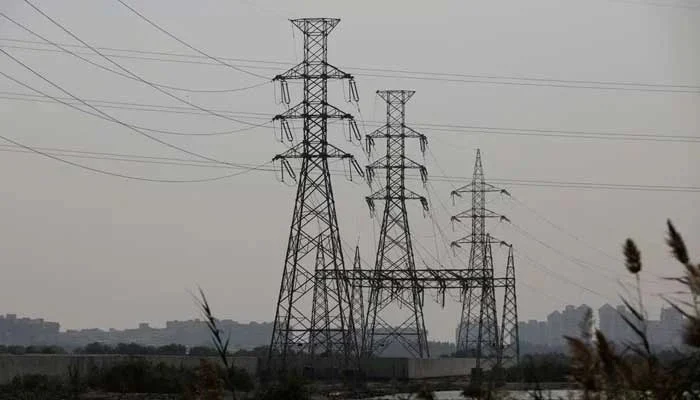
The 10-year roadmap, prepared by the Independent System and Market Operator in collaboration with the National Electric Power Regulatory Authority (Nepra) and other stakeholders, outlines planned expansion in both generation and transmission infrastructure across the country, including the K-Electric system.
Based on three GDP-linked demand scenarios — low (3.52%), medium (4.95%), and high (6.37%) — the required capacity additions are estimated at 62,657MW, 66,459MW, and 70,720MW respectively.
The projections are tied to expectations of rising electricity demand driven by economic recovery and industrial expansion. However, the report also notes a recent decline in actual consumption.
It highlights that the system load factor has dropped from 70–73% to around 58–60%, pointing to underutilisation of existing capacity. Distribution companies have also reported reduced grid usage due to economic pressures and the increasing adoption of rooftop solar and net metering.
Despite the recent slowdown, planners expect demand to recover over time, supported by efficiency improvements and demand-side management measures aimed at raising the load factor back to around 70% by 2035.
The IGCEP also signals a gradual shift in the country’s energy mix towards domestic and renewable sources. By 2035, hydropower is expected to contribute 34% of installed capacity, while solar and wind combined will account for 27%.
Meanwhile, reliance on imported fuels is projected to decline, with furnace oil phased out completely and reduced shares from imported coal and RLNG.
The plan includes major additions such as hydropower, solar, wind, nuclear, and RLNG-based generation, with total investment in generation estimated at $46 billion to $54 billion, alongside $4.6 billion to $6 billion for transmission upgrades.
Net metering is also expected to contribute significantly, with around 8,120MW added to the system over the plan period, reflecting the growing role of distributed solar generation.
While the strategy aims to ensure long-term energy security, analysts caution that if demand growth does not match projections, the country could face risks of surplus capacity and increased financial pressure on the power sector.