

Experts say reliance on indirect taxes and subsidy cuts may fuel inflation, strain households, and hurt industrial competitiveness.
Image: The News International
KARACHI: Economists have warned that Pakistan’s upcoming FY2027 budget may lead to higher energy prices and stronger inflationary pressure if fiscal consolidation relies heavily on indirect taxes and reduced subsidies.
Experts say the expected policy direction could increase the cost of living while weakening industrial competitiveness and economic growth.
Energy economist Afia Malik cautioned that rising electricity tariffs, driven by inefficiencies and policy adjustments, are already placing a burden on consumers and businesses.
She noted that electricity prices are inflated by capacity payments, transmission losses and system inefficiencies, forcing consumers to pay beyond actual consumption costs.
Another economist, Sajid Amin Javed, said the government is relying on regressive indirect taxes such as the petroleum development levy (PDL) instead of expanding the tax base.
He argued that such measures provide short-term fiscal relief but risk long-term economic harm by increasing pressure on already compliant taxpayers and households.
Experts also warned that rising energy costs could push electricity prices beyond affordability thresholds for middle-income households and industry, further weakening demand and productivity.
While subsidy reforms are aimed at improving efficiency, analysts say gaps in targeted support systems could leave vulnerable groups exposed to higher costs.
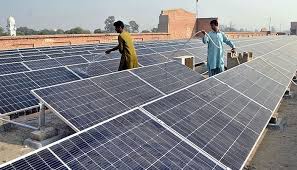
On the supply side, specialists recommend reducing inefficiencies in the power sector and improving grid infrastructure to better integrate renewable energy sources such as solar power.
Industry representatives have also raised concerns that escalating energy prices are eroding competitiveness and slowing manufacturing growth.
Economists argue that sustainable fiscal consolidation should focus on broadening the tax base and improving efficiency rather than increasing indirect taxes that disproportionately affect consumers.