

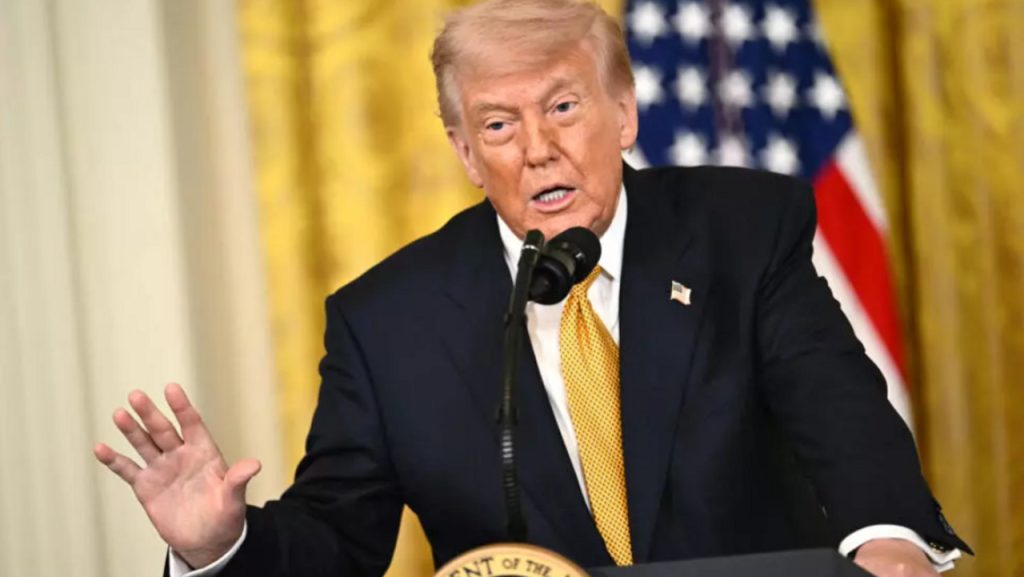
WASHINGTON: US President Donald Trump on Sunday dismissed Iran’s latest conditions for ending the Middle East conflict as “totally unacceptable,” raising fears of renewed escalation despite ongoing diplomatic efforts.
Image: France 24
Iran had earlier responded to Washington’s latest peace proposal through Pakistani mediators, while warning that it would retaliate against any future US strikes and oppose the presence of additional foreign naval forces in the Strait of Hormuz.
In a post on Truth Social, Trump said he had reviewed Tehran’s response and rejected it outright, though he did not provide details of the Iranian counterproposal.
“I have just read the response from Iran’s so-called ‘Representatives.’ I don’t like it — TOTALLY UNACCEPTABLE!” Trump wrote.
Iranian President Masoud Pezeshkian maintained a defiant tone, insisting Tehran would not surrender under pressure.
“We will never bow down to the enemy, and if there is talk of dialogue or negotiation, it does not mean surrender or retreat,” he said on X.
According to Iranian state media, Tehran’s response focused on ending hostilities across the region — particularly in Lebanon — and securing maritime routes. The US proposal reportedly centred on extending the Gulf ceasefire and opening negotiations on Iran’s nuclear programme and broader regional security issues.
The diplomatic deadlock unsettled global markets, with Brent crude oil prices climbing more than 2.5% as investors reacted to renewed uncertainty surrounding the Strait of Hormuz, a key global energy shipping route.
Israeli Prime Minister Benjamin Netanyahu said the war could not end until Iran’s enriched uranium stockpile was removed and its nuclear facilities dismantled.
“It’s not over, because there’s still nuclear material — enriched uranium — that has to be taken out of Iran,” Netanyahu said in an interview with CBS.
Reports also suggested Iran had proposed diluting part of its enriched uranium stockpile and transferring the remainder to a third country, while seeking guarantees that the material would be returned if negotiations collapsed or the US withdrew from any future agreement.
Meanwhile, tensions remained high in the Gulf after reports of fresh drone incidents involving vessels and airspace in the UAE, Kuwait, and Qatar.
Iran warned Britain and France against deploying naval forces to the Strait of Hormuz, insisting only Tehran had the authority to ensure security in the strategic waterway.
“Our restraint is over as of today,” Iranian parliamentary security commission spokesman Ebrahim Rezaei said, warning that any attack on Iranian vessels would trigger “a strong and decisive response” against American ships and bases.